
How to Write a Clear Brief for a Commercial Video
Every strong video project starts with a clear brief. It does not need to be long or complicated, but it does need to outline what you want to achieve, who it is for, and how it will be used. A well written video brief helps your production team understand the goals, expectations, and creative direction of your project so everyone is aligned from day one.
Here is a simple breakdown of what to include when you are writing a commercial video brief.

1. Define the purpose of your video
Start with one clear sentence that sums up the objective. Is this a promotional video for brand awareness, a product explainer, internal communication, or something for recruitment?
A concise purpose helps your production team understand the core message and the outcome you want.
2. Identify your target audience
Be specific about who the video is for. Consider the age group, interests, challenges, job roles, or buying behaviours. The clearer the audience, the easier it is to choose the right tone, pace, format, and style.
3. Decide where the video will be published
Where the video is going determines a lot of production decisions. For example:
Website
Landing pages
LinkedIn
Instagram or TikTok
YouTube
Internal platforms
Different channels have different requirements for length, aspect ratios, captions, pacing, and on screen text. Your team needs this information upfront to plan the shoot correctly.
To see how different formats work in practice, have a look at our recent video projects.

4. Outline how long the video should be
There is no universal best length. A homepage explainer might be 60 to 90 seconds, social content might be 10 to 30 seconds, and interviews might run longer. Even if you are not sure on the exact duration, a rough guide helps shape the production approach and the level of detail needed.
5. Share your tone of voice and brand guidelines
Your video should feel like an extension of your brand. Include:
Tone of voice
Key messages
Logo usage
Colour palette
Fonts
Style references
This ensures the video feels consistent with everything else you produce.
6. List any non negotiables or existing assets
If there is anything that has to be included, such as:
Logos
Taglines
Audio idents
Brand elements
Existing animations
Previous footage
CAD files for 3D work
Add them to the brief. This can save time, streamline production, and reduce costs.
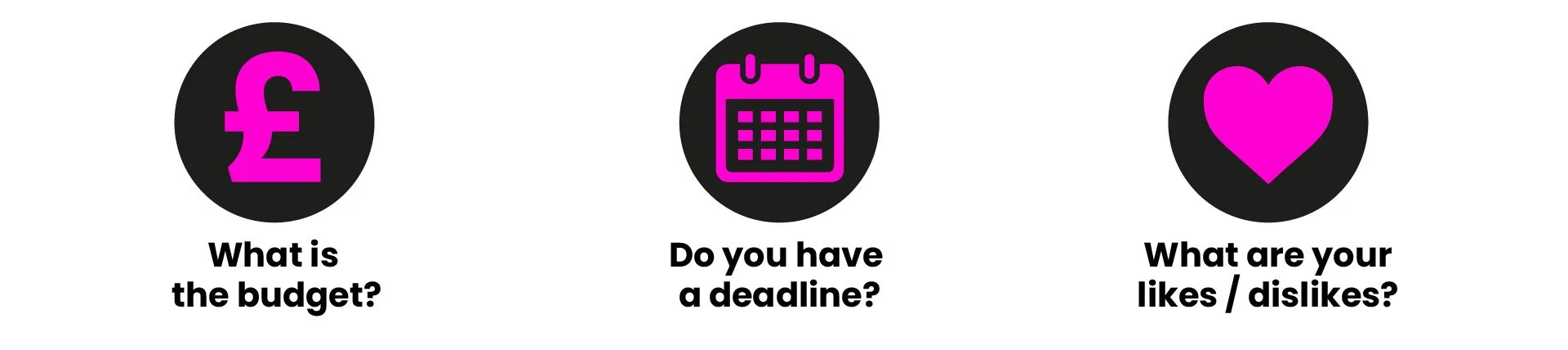
7. Be clear about your budget
A clear budget helps your production team suggest realistic ideas and avoid concepts that cannot be delivered. A smaller budget does not mean a less effective video. It simply shapes what is possible within your scope.
Transparency here saves a lot of back and forth.
8. Set timelines and delivery dates
Include:
Your ideal final delivery date
Any internal review stages
Deadlines for scripting, filming, or approvals
This helps your production team plan the schedule and keeps everyone aligned.
9. Share examples and references
References are invaluable, even if they are rough ideas. These could include:
Videos you like
Styles you want to avoid
Moodboards
Shot references
Competitor content
Previous projects
These examples help your team understand your taste, your expectations, and the overall direction you have in mind.
If you are still deciding what type of content you need, our fixed price video packages outline the different formats and how they support your brand.
Final Thoughts
A strong video brief gives your production team everything they need to create content that is aligned with your goals, your audience, and your brand. It does not need to be perfect, but it should be clear, honest, and practical.
If you want help shaping your brief or developing a concept, get in touch and we can guide you through the process.